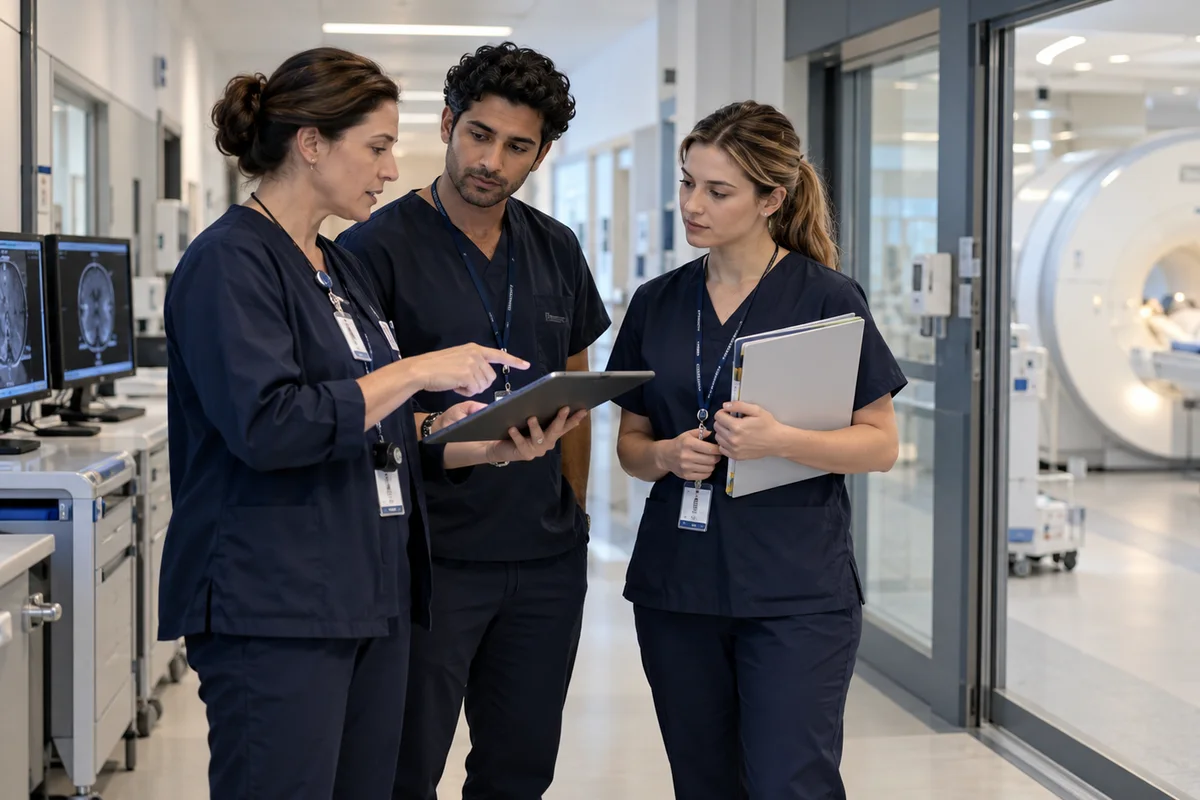
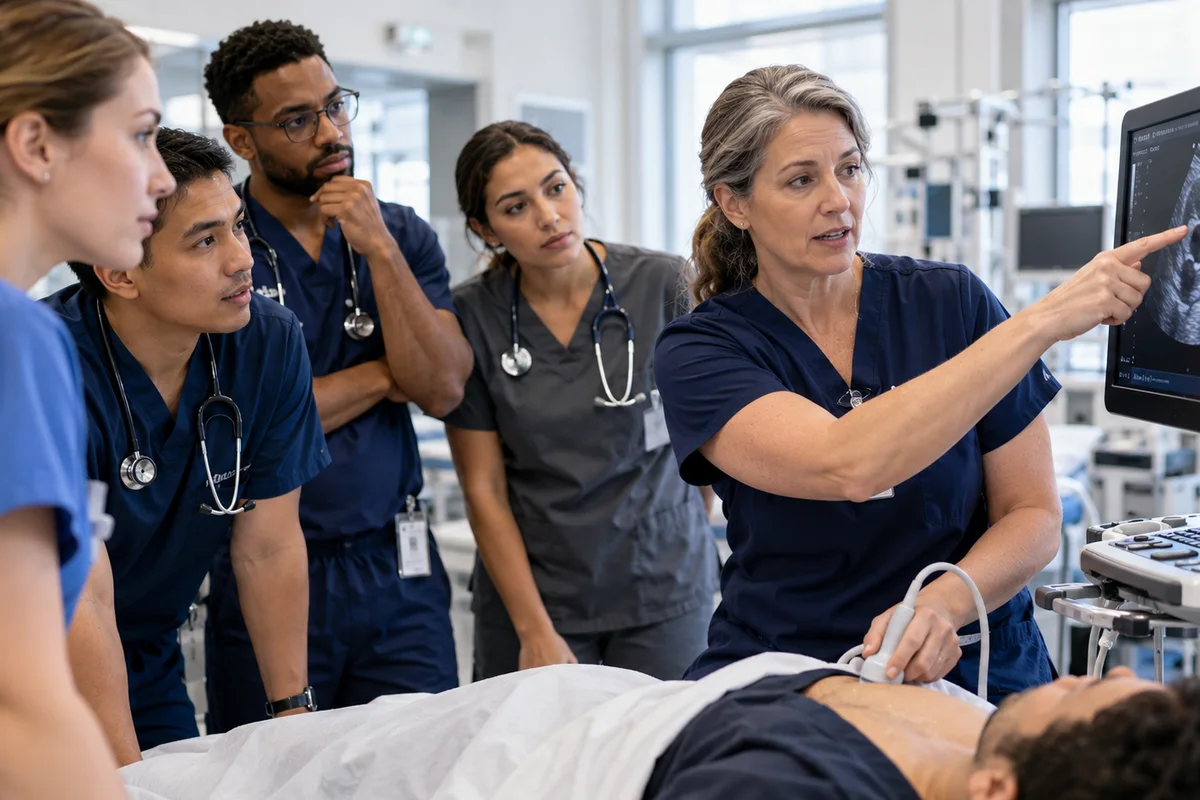
Supporting staff who need an imaging skills refresher

Even skilled professionals sometimes need support. A technologist returning from leave, a sonographer moving to a new specialty, or a clinician whose ultrasound skills have faded with limited use can all benefit from focused refresher training. Handled well, skills remediation strengthens your team and protects quality. Handled poorly, it can feel punitive and damage morale. Here is how to get it right.
Recognize when a refresher is needed
Common triggers include image quality concerns found in peer review, a return to clinical work after an extended absence, a move to new equipment or protocols, and a gap between training and regular use. Identifying needs early makes support simpler and less stressful for everyone.
Keep it supportive and confidential
The goal of remediation is growth, not punishment. Frame refresher training as professional development, keep conversations private and focus on specific, observable skills. Professionals respond best when they understand exactly what to improve and see a clear path to get there.
Target specific skills
Effective remediation is focused. Rather than repeating an entire course, it addresses the specific views, protocols or techniques where the professional needs support. A short skills assessment identifies those areas, and training concentrates on them.
Use an outside instructor when it helps
An external instructor can make remediation easier for everyone. It removes awkward dynamics between colleagues, offers a fresh perspective and gives the learner a neutral, supportive coach. It also frees senior staff from adding teaching to an already full workload.
Document progress and close the loop
Agree on clear goals at the start and document progress against them. A final checkpoint confirms that the professional has met the agreed standard, giving managers confidence and giving the learner a clear finish line.
How MIG Healthcare helps
MIG Healthcare provides confidential, focused skills remediation and refresher training for MRI technologists, sonographers and clinicians using point-of-care ultrasound. We assess specific needs, deliver targeted one-on-one or small-group training and document progress for your managers. Your organization keeps responsibility for competency decisions and clinical authorization. Learn how we measure progress.
Frequently asked questions
Is remediation training confidential?
Yes. Remediation is handled privately between MIG, the participant and the managers you designate.
Can you provide one-on-one refresher training?
Yes. Remediation can be delivered one-on-one or in small groups, depending on the need.
Which modalities do you cover?
MIG provides refresher training for MRI, diagnostic ultrasound and point-of-care ultrasound.