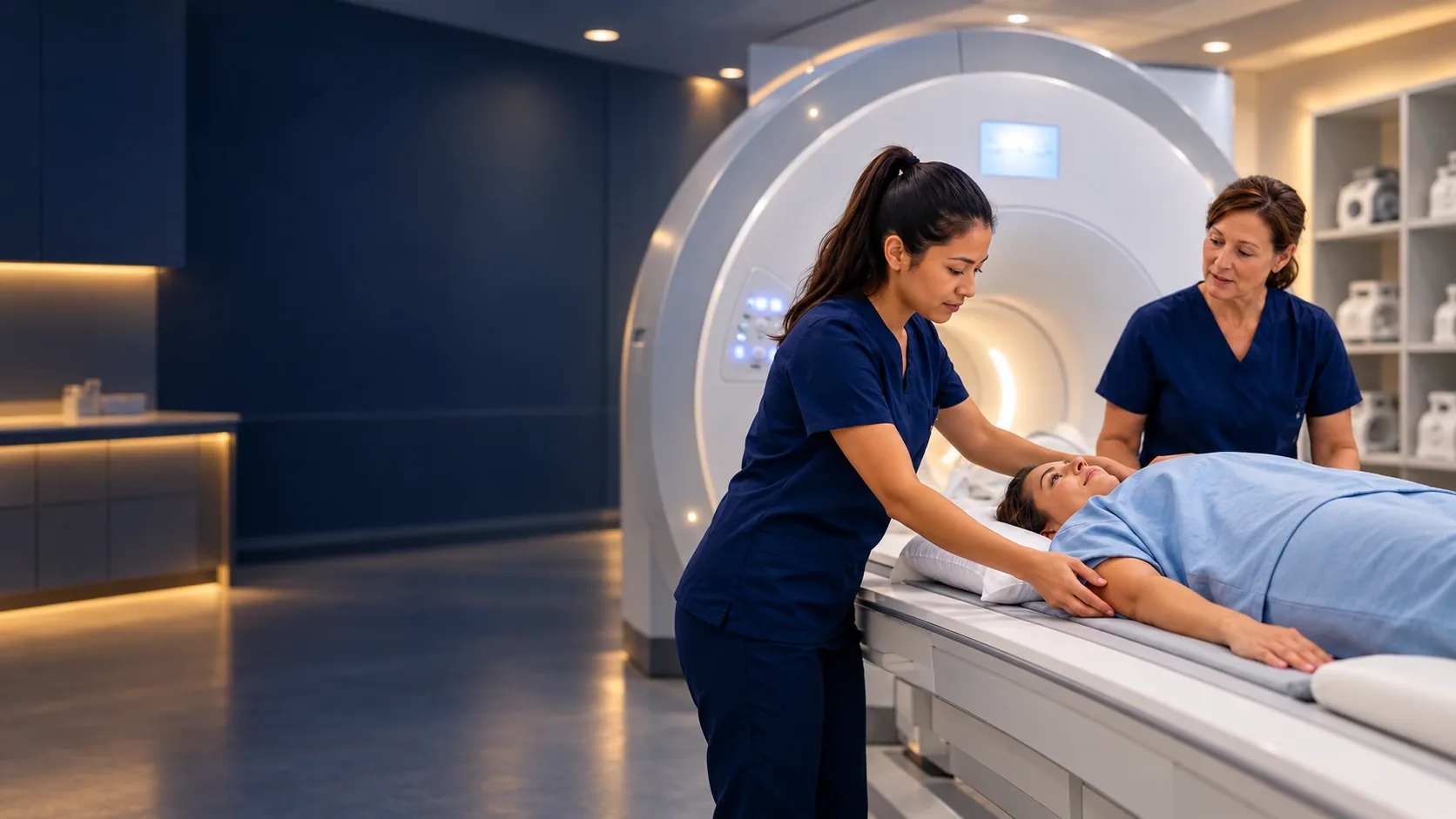
Confidence that has actually been tested.
Clinical placements and hands-on training for MRI, ultrasound and radiologic technology programs. Students prepare with us, then practice under qualified supervision at school-approved clinical sites.
Learn imaging from more than one side of the glass.
Readiness includes orientation, case discussion and image review. Scanner-room and control-room learning take place at clinical training sites.
Skills that show up on day one.
Working toward the competencies your school sets.
Safety and screening
Safety awareness, screening habits and the judgment to recognize uncertainty and ask for help.
Patient care and communication
Clear communication, patient preparation and the professional habits of a supervised clinical encounter.
Positioning and equipment
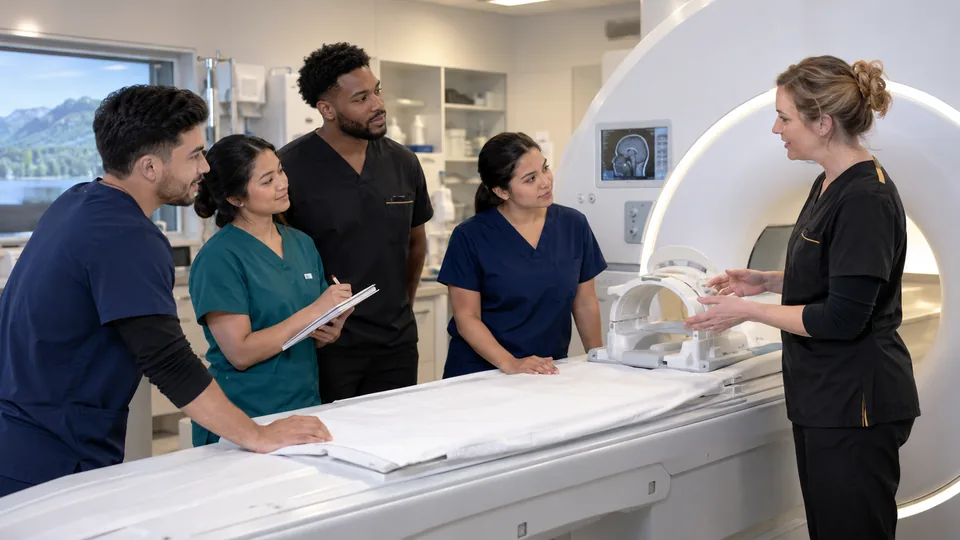
Coils, transducers, positioning concepts and equipment preparation, connected to scanner-based practice.
Workflow and scan preparation
How the patient, the room, the console and the exam fit together, before the table moves.
Image review and judgment
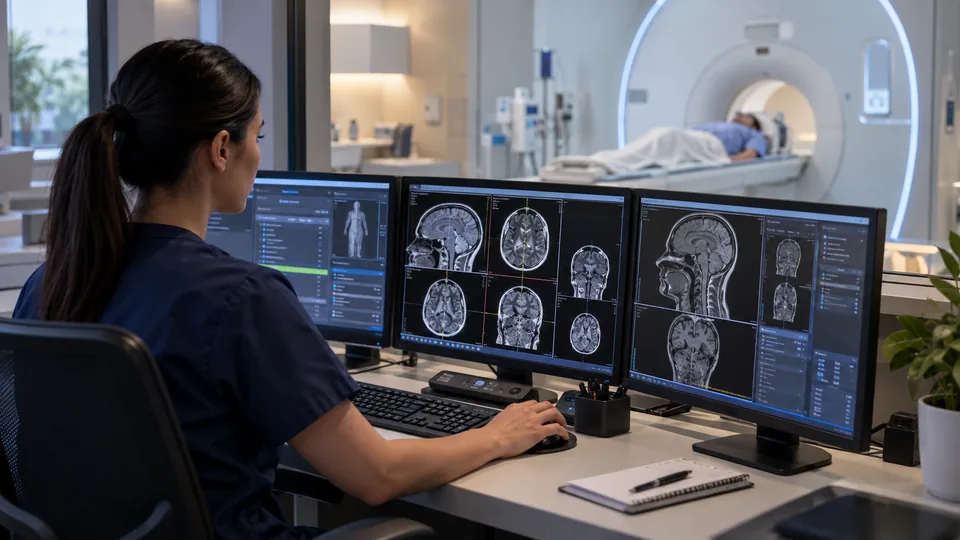
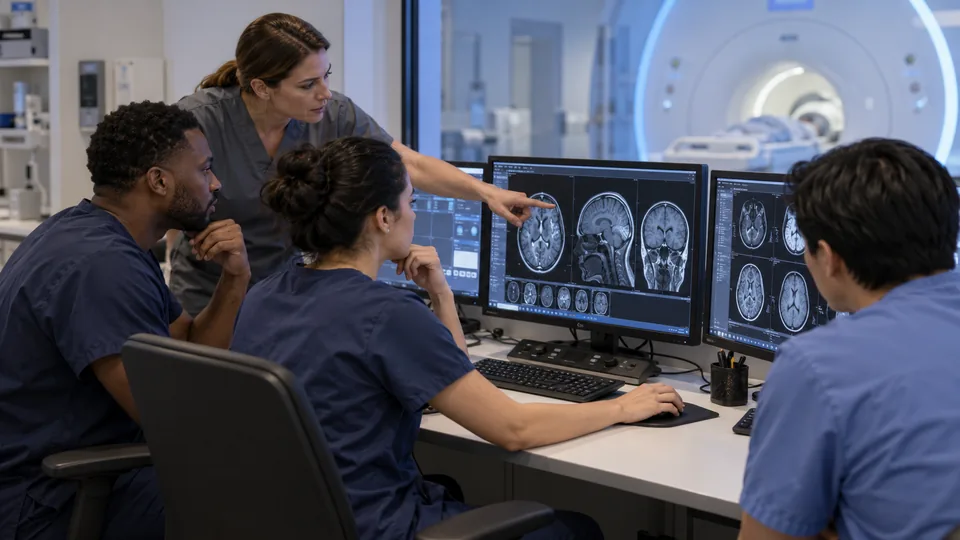
Reviewing images with an instructor to recognize what good work looks like and what needs refinement.
Competency preparation
Scenario work, individual feedback and documented progress toward school-directed assessment.
Prepare with MIG. Practice at clinical sites.
At our Symphony Towers training hub in downtown San Diego, students receive supplemental preparation in safety, screening, communication, positioning concepts, workflow and image review. No scanner is located at Symphony Towers.
Patient-based experience takes place at partner clinical sites, where placements are approved by the student's school and supervision requirements are met. Students see their schedule and progress in the MIG Partner Portal.
From requirements to rotation.
Every partnership starts with your faculty's requirements.
Align requirements
Clinical hours, competencies, supervision, assessment approach and cohort timing.
Coordinate rotations
Site capabilities, schedules, assigned locations and available capacity.
Prepare and support
Readiness training, site expectations and supervised feedback.
Document and report
Attendance, competency progress and follow-up, visible in the Partner Portal.
Your school determines which activities and hours count toward program requirements, and determines certification eligibility. Readiness sessions at MIG do not automatically count as clinical hours.
Clinical-site approval, supervision, schedules, capacity and competency expectations are confirmed before placement.
Your students. Their next possibility.
Share your campus, modality, cohort size, start date and required clinical hours.