Planning POCUS training for clinicians and healthcare teams

Point-of-care ultrasound (POCUS) has moved from a specialty skill to an everyday tool in emergency departments, hospital medicine, critical care, urgent care and outpatient clinics. Bringing it to your team works best when training starts with a clear plan: who is learning, what they need to do at the bedside, and how you will know the training worked.
This guide walks clinical leaders and education teams through the decisions that shape a successful POCUS training program, and explains how MIG Healthcare builds training around them.
Start with the people, not the probe
The most common mistake in POCUS training is treating every learner the same. A hospitalist, an emergency nurse and an advanced practice provider bring different experience and need different applications. Before choosing a course, list the roles taking part, their current ultrasound exposure and the clinical setting where they will use it.
At MIG Healthcare, every program begins with that conversation. We group participants by role and experience so beginners build fundamentals while experienced users move directly to the applications they need.
Define the clinical questions your team needs to answer
Strong programs are built around the questions clinicians face at the bedside rather than around a long list of exam types. Common starting points include:
- Equipment orientation, transducer selection and image optimization
- FAST and eFAST for trauma assessment
- Lung ultrasound for dyspnea and fluid status
- Focused cardiac views for function and effusion
- Vascular access and venous assessment
- Musculoskeletal and soft-tissue applications
Choosing two or three priority applications for a first cohort keeps training focused and makes progress easier to measure.
Choose a format that fits your schedule
Clinical teams rarely have long blocks of protected time. MIG offers training at your facility, at our San Diego training hub at Symphony Towers, or as a blended program that combines short instruction sessions with supervised hands-on practice. Each format is scheduled around shifts and staffing so learning does not compete with patient care.
Make hands-on practice and feedback the core
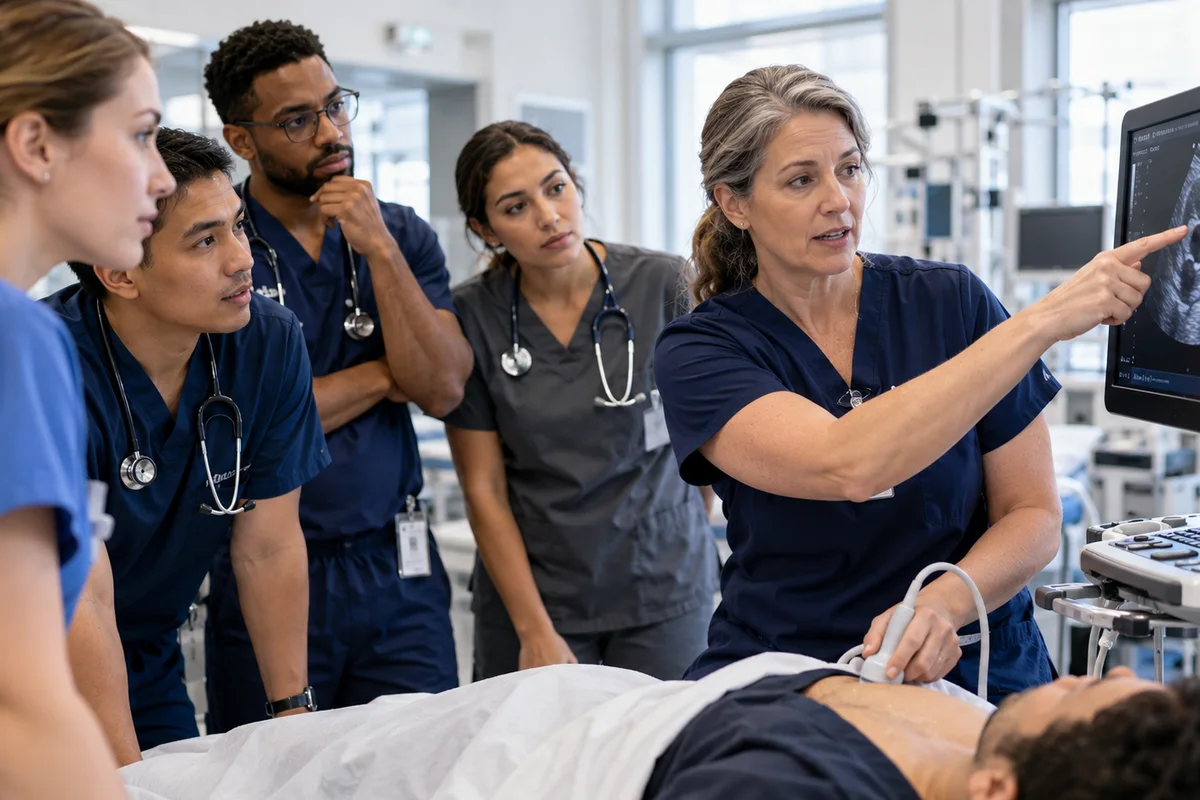
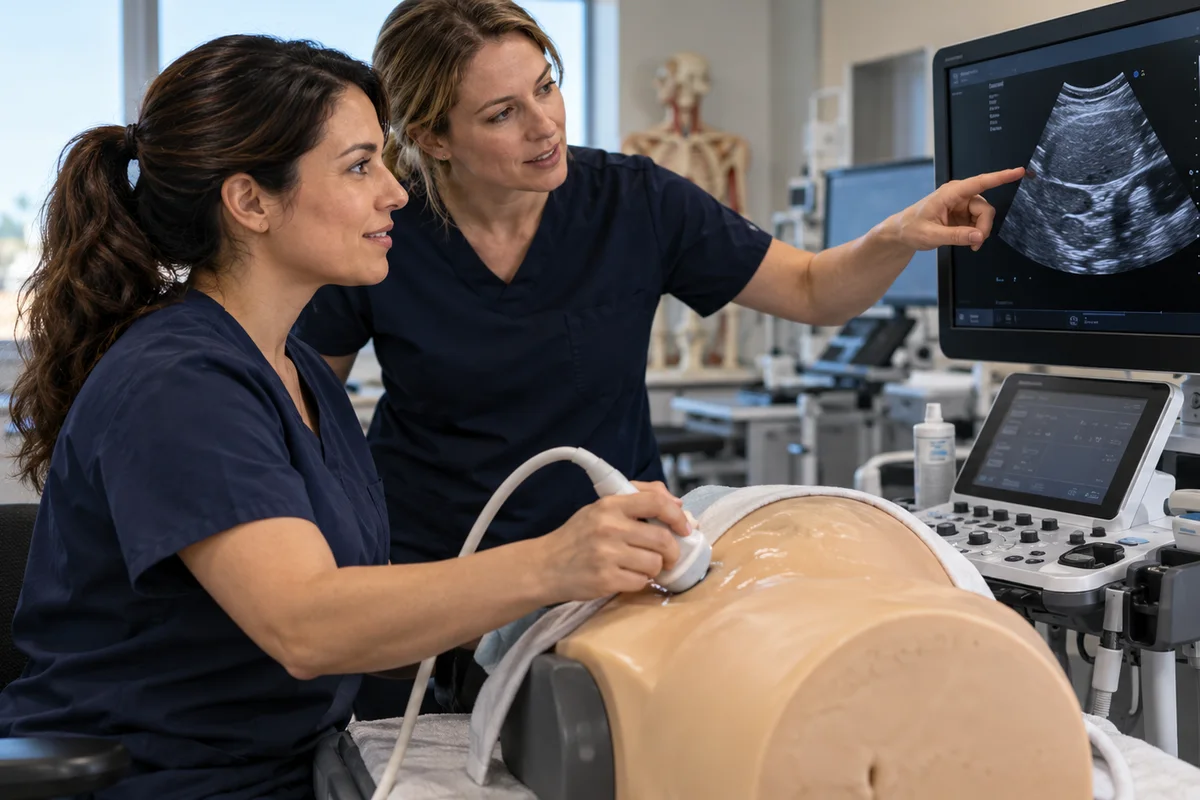
Ultrasound is a motor skill. Participants need time with the transducer, direct instructor feedback on probe position and image quality, and repetition until views become reliable. Ask any training partner how much of the program is hands-on, what the instructor-to-participant ratio is, and how feedback is documented.
Plan how you will measure progress
Decide early what success looks like. Useful measures include supervised image acquisition, image-quality review and documented skills checkpoints tied to the applications you chose. MIG provides participant progress summaries so education leaders can see where each learner stands and who may need additional support. Read our guide to measuring POCUS training competency.
Understand what training does and does not cover
POCUS training develops skills within each participant's existing role. It does not grant clinical privileges or certify a new clinical service. Your organization keeps responsibility for credentialing, clinical authorization and its own competency requirements. A good training partner supports those processes rather than replacing them.
Frequently asked questions
Who is POCUS training for?
Physicians, nurses, physician assistants, nurse practitioners and other clinicians who use or plan to use bedside ultrasound. Programs are tailored by role and experience level.
Where does MIG offer POCUS training?
At your facility, at our San Diego training hub in Symphony Towers, or in a blended format. We work with healthcare organizations across California.
How long does a POCUS training program take?
It depends on the applications and the starting experience of your team. Focused programs can be completed in a few sessions, while department-wide programs are typically delivered in phases.
How do we get started?
Tell us about your team, the applications you want to develop and your preferred timing. We will recommend a format and schedule your group into an upcoming cohort.