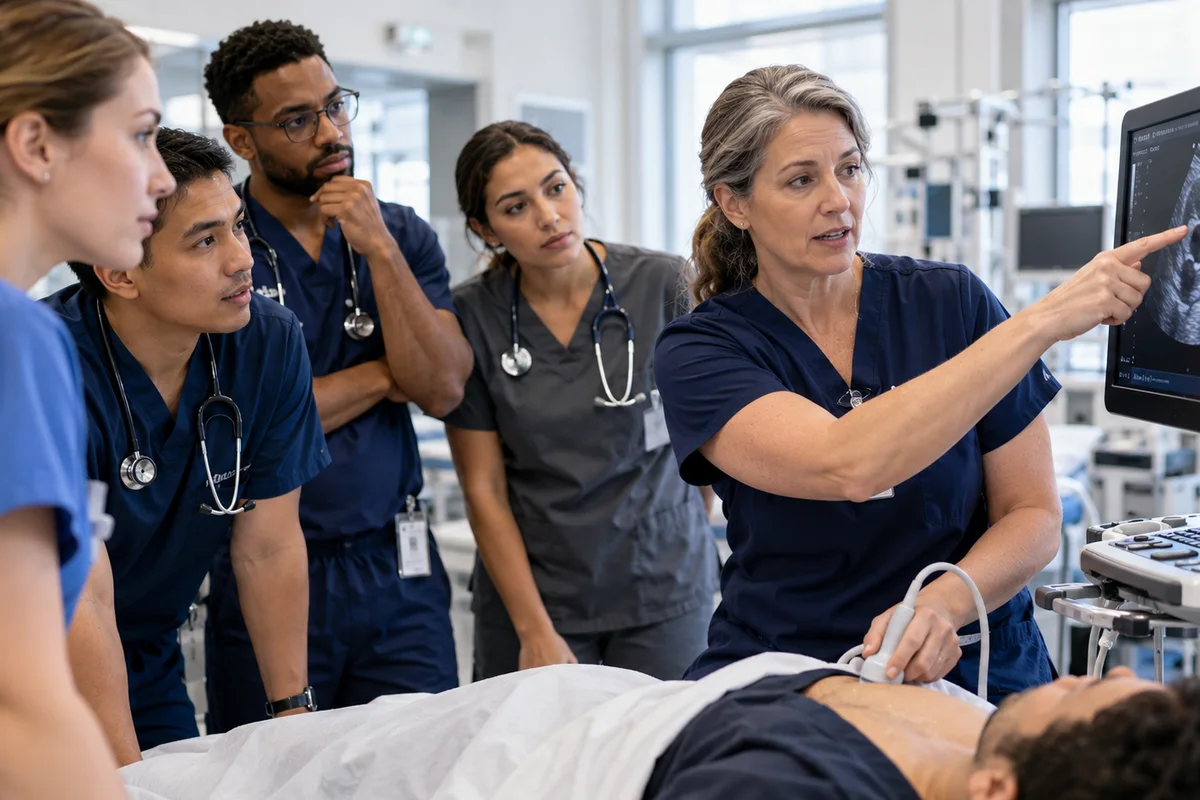
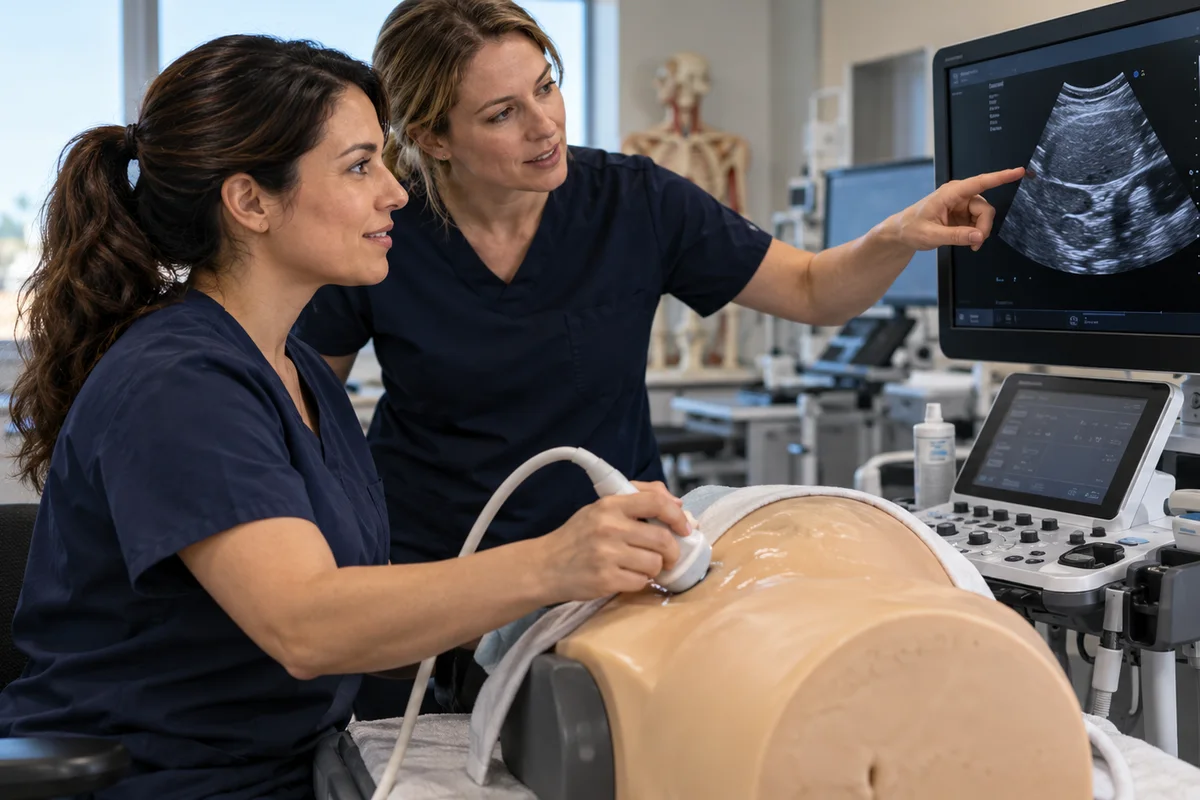
Why healthcare teams are investing in POCUS training
Point-of-care ultrasound, or POCUS, puts a fast, radiation-free imaging tool in the hands of the clinician at the bedside. Hospitals, medical groups, urgent care centers and clinics across the country are investing in POCUS training for their physicians, nurses and advanced practice providers. For healthcare leaders weighing that investment, here is why it has become a priority and what to consider before you begin.
Faster answers at the bedside
A focused ultrasound exam can help a trained clinician answer a specific question in minutes, such as whether there is fluid around the heart, free fluid in the abdomen or signs of a collapsed lung. When that answer comes at the bedside instead of after a separate imaging appointment, care decisions can move sooner. For busy emergency departments and inpatient units, that speed matters to patients and to patient flow.
Better procedural support
Ultrasound guidance has become a standard of care for many procedures, especially vascular access. Training clinicians to use it confidently supports safer procedures and fewer repeated attempts, which is better for patients and less stressful for staff.
A skill clinicians want
Many clinicians graduated without formal ultrasound training and want to close that gap. Offering structured POCUS education is a meaningful professional development benefit. It shows your organization invests in its people, which supports engagement and retention in a competitive hiring market.
Making the most of equipment you already own
Many organizations already have portable ultrasound systems that sit unused because staff were never trained to use them well. A focused training program can turn that existing equipment into a tool your team relies on every day.
What leaders should plan for
POCUS training pays off when it is planned like any other clinical program. Before you start, decide:
- Which roles and units will participate first
- Which two or three applications matter most to those units
- How much time staff can realistically protect for training
- How you will document progress and support your credentialing process
Starting with a focused pilot group lets you prove value before expanding department-wide. See our step-by-step guide to building a POCUS program.
How MIG Healthcare helps
MIG Healthcare delivers professional training and POCUS education for healthcare organizations in San Diego and across California. Programs are built around your team's roles and goals, delivered at your facility or our San Diego training hub, and documented so your leaders can see progress. Your organization keeps full responsibility for clinical authorization and credentialing.
Frequently asked questions
Is POCUS training worth it for a small clinic?
Often, yes. Smaller teams can start with one or two high-value applications and a short, focused program, which keeps the investment proportionate to the benefit.
Does POCUS training replace formal imaging?
No. POCUS answers focused clinical questions at the bedside. It complements, rather than replaces, comprehensive diagnostic imaging performed by imaging departments.
How do we choose where to start?
Start with the unit where bedside ultrasound will make the biggest difference and where leaders are ready to support protected training time.