Building a POCUS program for your department, step by step
A successful point-of-care ultrasound program is more than a training day. It combines clear goals, the right people, practical training, documentation and ongoing support. Whether you lead an emergency department, a hospital medicine group or an outpatient practice, here is a step-by-step path from first conversation to a program your team relies on.
Step 1: Name a clinical champion
Programs succeed when someone inside the department owns them. A clinical champion, often a physician or nurse leader with ultrasound experience, keeps momentum, answers questions and connects the program to department priorities.
Step 2: Choose your first applications
Pick two or three applications that solve real problems in your department today. In an emergency department that might be FAST and vascular access. On an inpatient unit it might be lung ultrasound and difficult IV access. Focused goals make training faster and results easier to see.
Step 3: Start with a pilot group
Train a small group first. A pilot of motivated clinicians tests your schedule, your equipment and your documentation before you scale. Their early success also builds interest across the department.
Step 4: Confirm equipment and workflow
Make sure ultrasound systems are available where clinicians will use them, that images can be saved according to your policies, and that staff know how bedside ultrasound fits into documentation and workflow.
Step 5: Train with hands-on practice and feedback
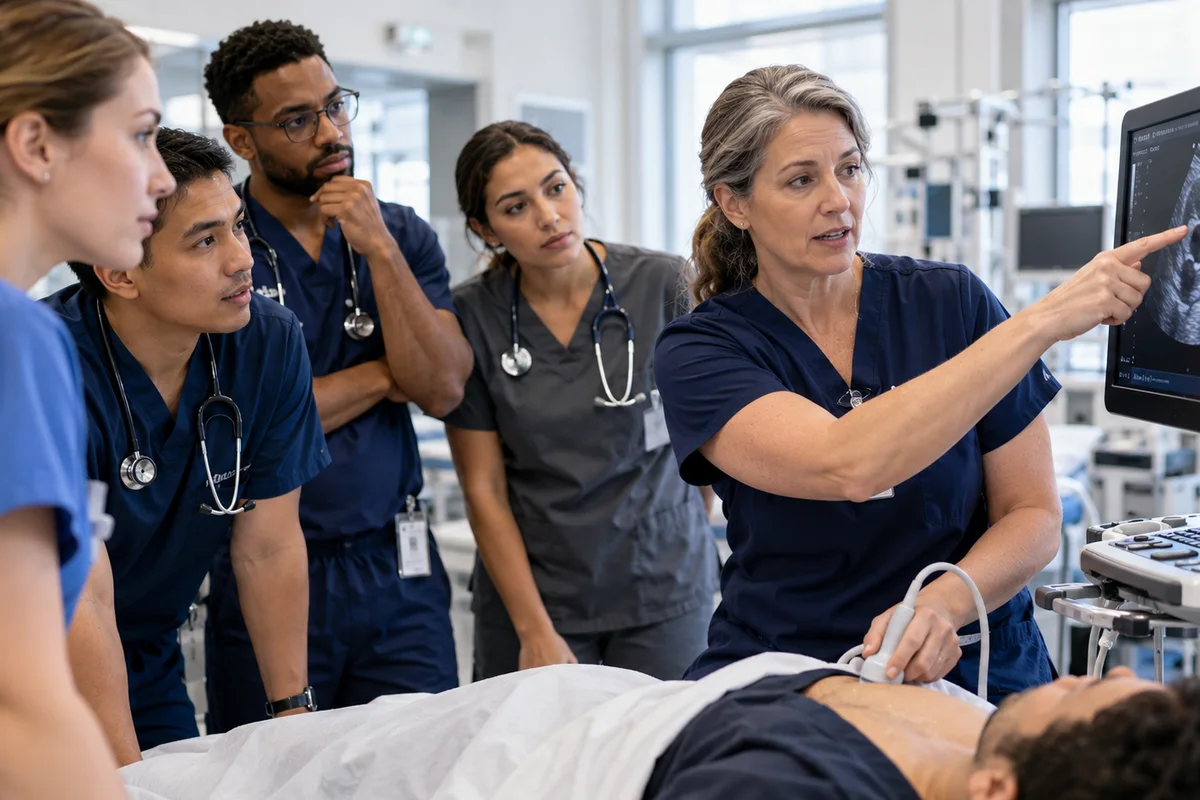
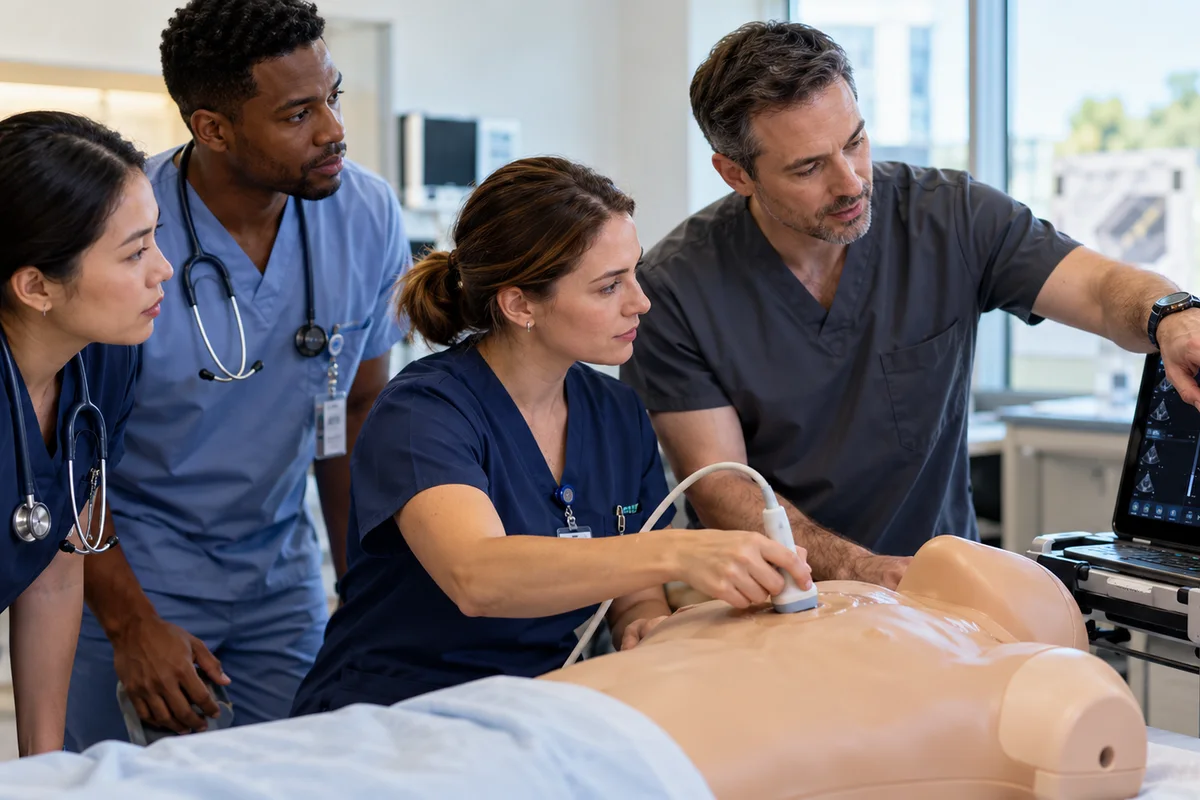
Effective POCUS training is mostly hands-on. Participants need supervised practice, direct feedback on technique and image quality, and repetition. Spreading sessions over several weeks supports retention better than a single long day.
Step 6: Document competency
Use skills checkpoints and image review to document progress, and share results with your education and credentialing teams. Our guide to measuring POCUS competency explains what to track.
Step 7: Expand and sustain
Once the pilot succeeds, add participants, roles and applications in phases. Plan periodic refreshers and onboarding for new hires so the program keeps working as your team changes. See how structured skills training supports new hires.
How MIG Healthcare supports your program
MIG Healthcare partners with healthcare organizations to plan and deliver POCUS training programs, from a first pilot cohort to department-wide rollout. We provide instruction at your facility or our San Diego training hub, progress documentation and refresher training as your program grows. Your organization keeps full authority over clinical policies and credentialing.
Frequently asked questions
How many people should be in a pilot group?
A small group of motivated clinicians is ideal. It is large enough to test the program and small enough to give everyone meaningful hands-on time.
How long does it take to build a department POCUS program?
A pilot can be completed in weeks. Department-wide programs are usually rolled out in phases over several months.
Can MIG help us plan the program, not just teach it?
Yes. We help define goals, select applications, plan the pilot and set up progress documentation.