POCUS training for nurses, physicians and APPs: how needs differ by role
Point-of-care ultrasound training is not one-size-fits-all. A nurse placing peripheral IVs, an emergency physician assessing trauma and a nurse practitioner managing heart failure in clinic each need a different set of skills. Matching POCUS training to the role is the fastest way to get value from it and the best way to keep learners engaged.
Nurses: vascular access and focused assessments
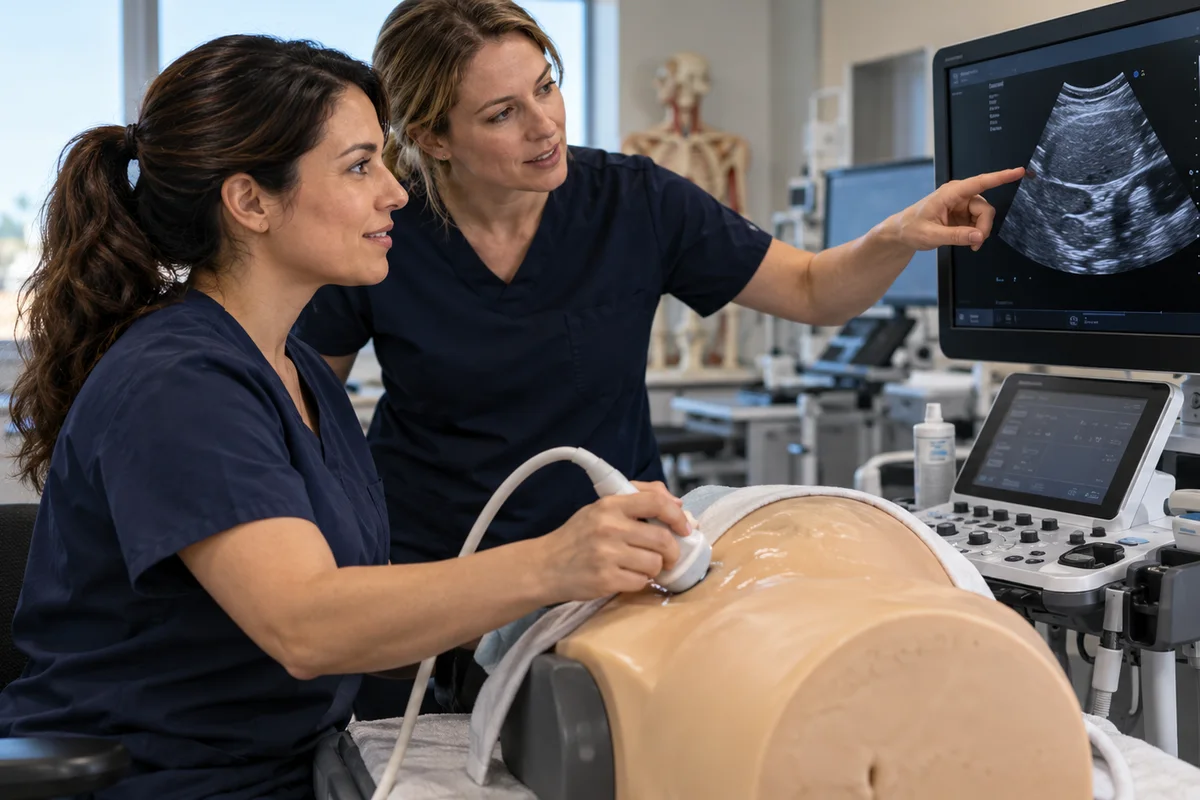
For many nursing teams, the highest-value application is ultrasound-guided peripheral IV placement, especially for patients with difficult venous access. Training focuses on vein identification, needle visualization and safe technique. Depending on the unit and organizational policy, nurses may also learn focused assessments such as bladder volume. Nursing programs work best with short, practical sessions and plenty of supervised practice.
Physicians: diagnostic applications by specialty
Physician needs vary widely by specialty. Emergency and critical care physicians often focus on FAST and eFAST, lung ultrasound, focused cardiac views and procedural guidance. Hospitalists may prioritize volume assessment, lung and cardiac applications. Training for physicians emphasizes image acquisition, recognizing key findings and integrating ultrasound into clinical decision-making within their scope of practice.
Physician assistants and nurse practitioners
Advanced practice providers often work across settings, from urgent care to inpatient services to outpatient specialty clinics. Their training should reflect where they practice. An urgent care APP may focus on musculoskeletal and soft-tissue applications, while an inpatient APP may need cardiac, lung and vascular skills.
Mixed teams: train together, specialize where needed
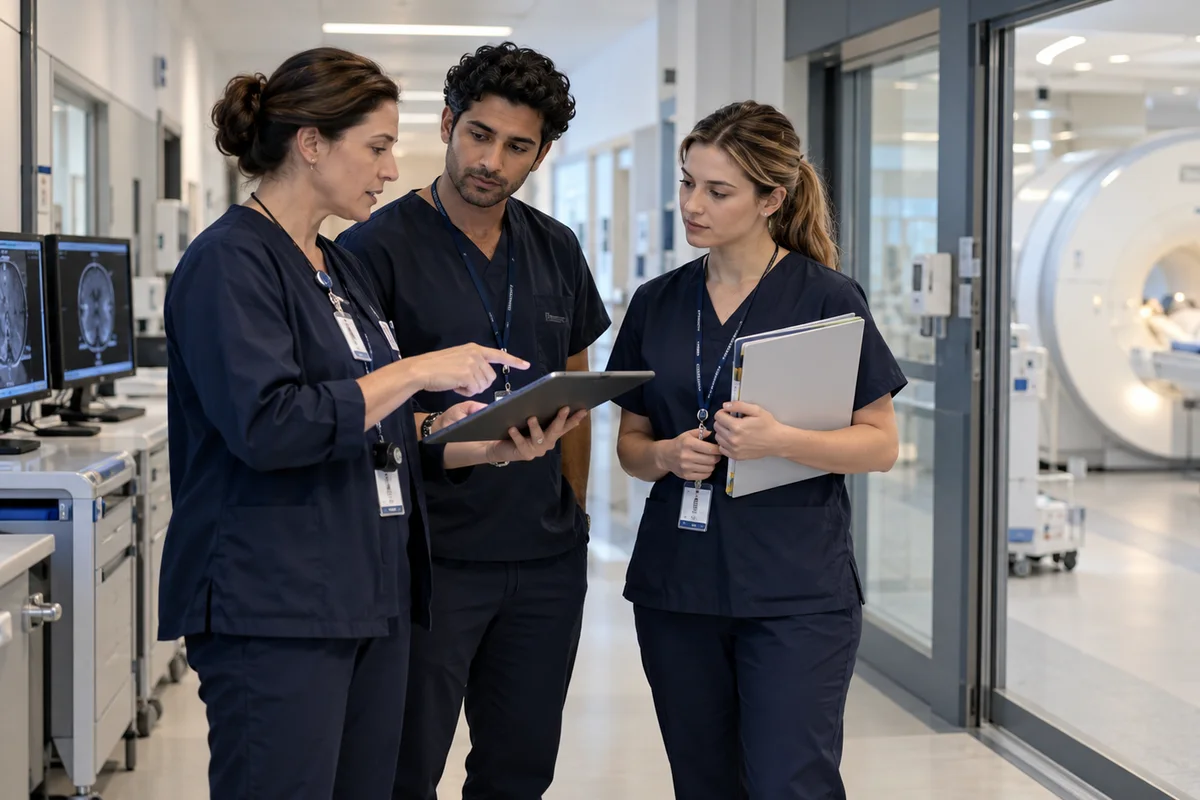
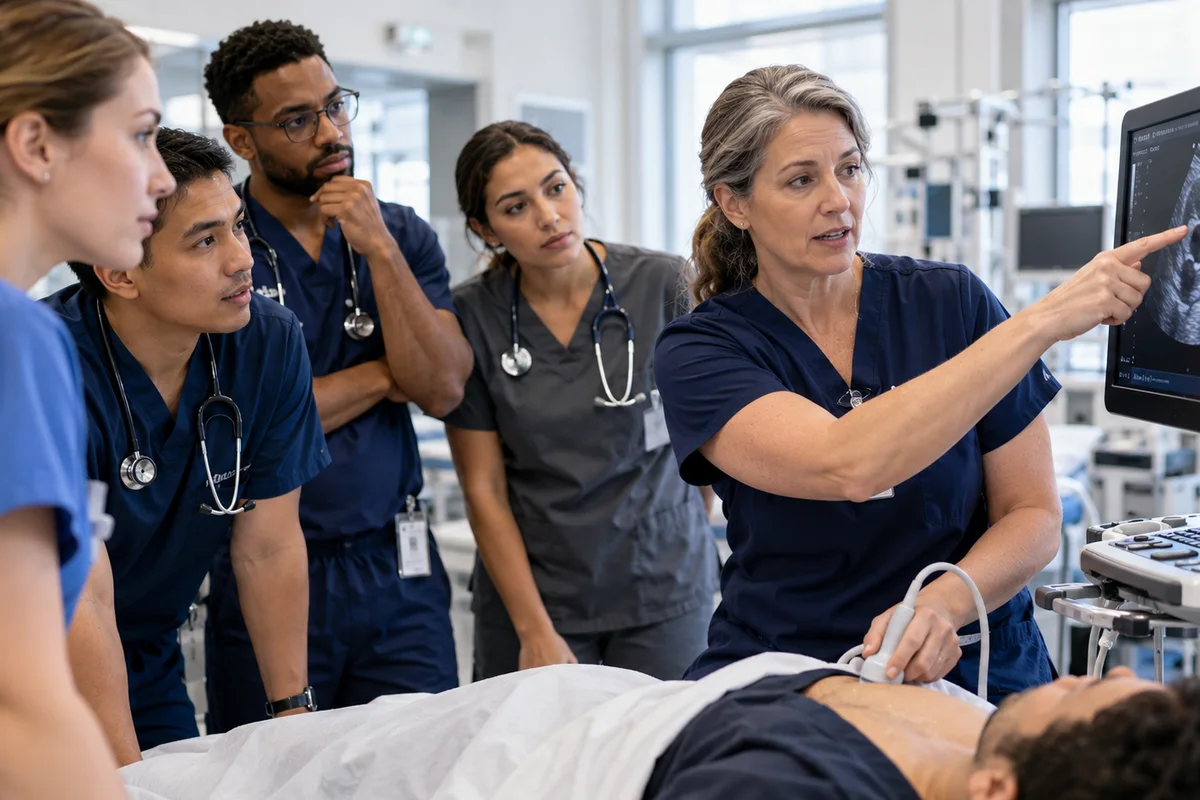
Many organizations train mixed groups. Shared fundamentals such as equipment orientation, knobology and image optimization work well across roles. Role-specific applications are then taught in smaller groups. This approach builds a common language across the team while respecting each role's scope.
Respecting scope of practice
Every POCUS program should align with your organization's policies, state regulations and each role's scope of practice. Training builds skills; your organization decides how those skills are authorized and used. A good training partner designs content around your policies, not the other way around.
How MIG Healthcare tailors training
MIG Healthcare designs POCUS training around the roles on your team. We start by learning who will participate, their experience and the applications that matter most to their work, then build sessions that group learners appropriately. Training is offered at your facility or at our San Diego training hub. Read our POCUS training planning guide.
Frequently asked questions
Can nurses and physicians train in the same POCUS course?
Yes, for shared fundamentals. Role-specific applications are best taught in smaller groups organized by role and experience.
What is the best first POCUS skill for nurses?
For many nursing teams, ultrasound-guided peripheral IV access offers the most immediate value, subject to your organization's policies.
Do you train advanced practice providers?
Yes. MIG trains physician assistants and nurse practitioners with programs matched to their practice setting.