How to measure whether POCUS training worked
Every healthcare leader who funds training eventually asks the same question: did it work? For point-of-care ultrasound, the answer should be more than attendance. It should show that clinicians can acquire useful images, recognize what they are looking at and apply the skill appropriately. Here is how to measure POCUS training in a way your education, quality and credentialing teams can use.
Define success before training begins
Measurement starts with the goals you set. If your first cohort is learning ultrasound-guided vascular access and lung ultrasound, define what competency looks like for each. Clear, written expectations give learners a target and give leaders a standard to measure against.
Use supervised skills checkpoints
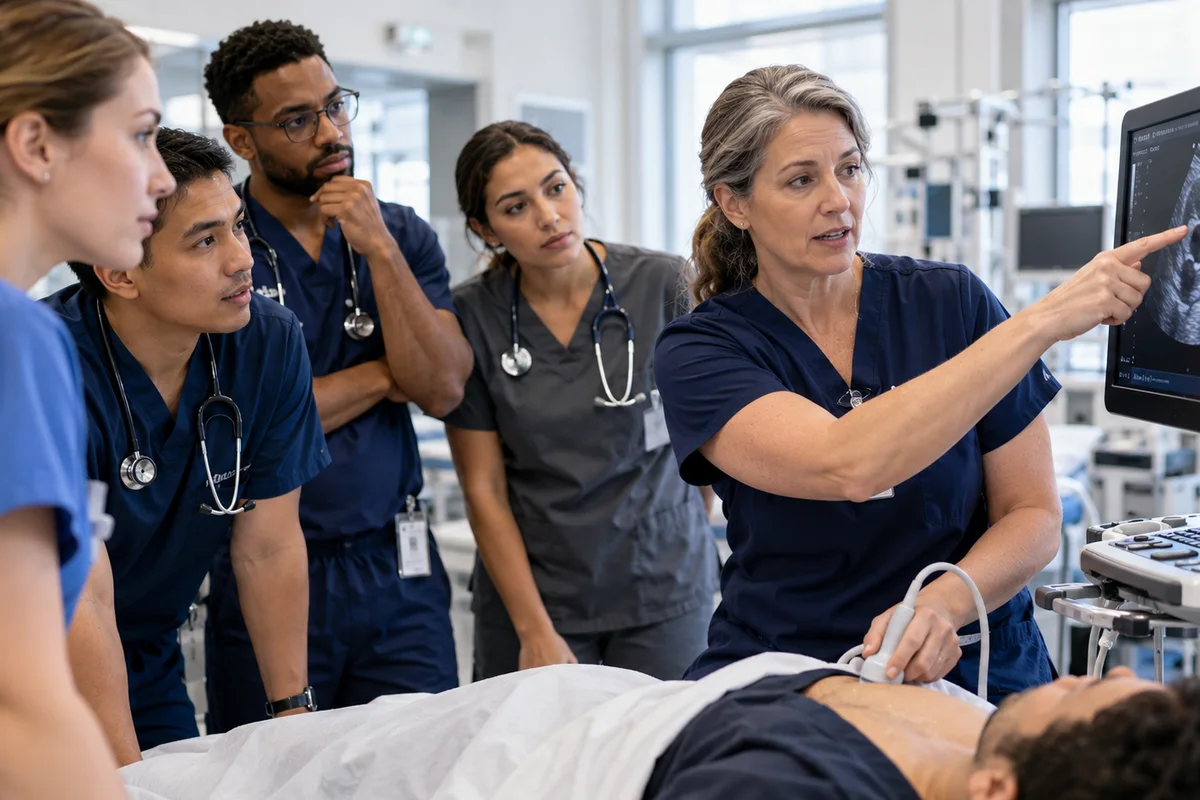
The most direct measure of an ultrasound skill is watching it performed. Supervised checkpoints, where an instructor observes a participant acquire specific views, show whether a learner can reliably produce usable images. Checkpoints can be repeated over time to show progress.
Review image quality
Saved images offer a second, objective measure. Reviewing image quality, orientation and completeness shows where a learner is strong and where they need more practice. Image review also gives learners specific feedback they can act on in their next session.
Track progress across the cohort
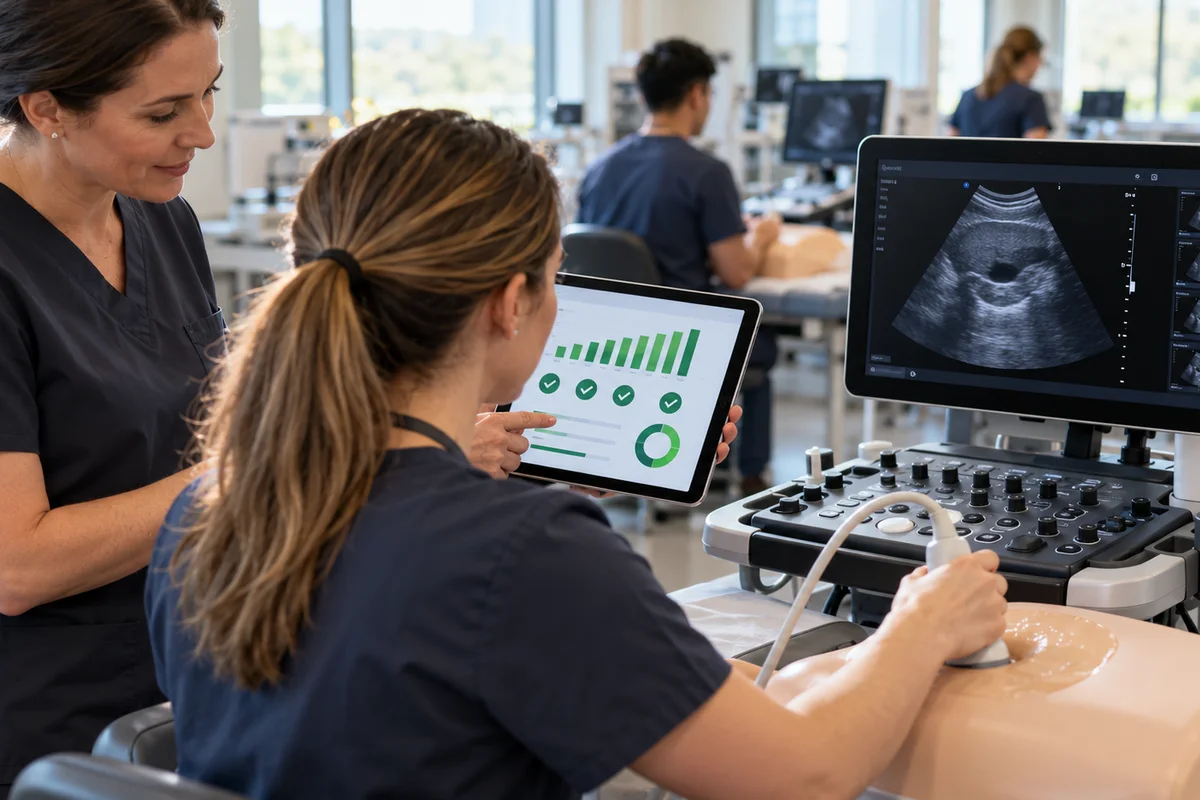
Individual results matter, but leaders also need the big picture. A simple progress summary showing which participants have completed each checkpoint, and who needs additional support, helps education teams plan next steps and allocate instructor time where it matters most.
Connect training to your credentialing process
Training documentation can support your organization's credentialing and privileging decisions, but it does not replace them. Your organization sets the requirements for clinical authorization. A good training partner provides clear documentation that fits into your existing process.
Follow up after the program ends
Ultrasound skills fade without use. A follow-up checkpoint a few months after training shows whether skills are being retained and used in practice, and identifies clinicians who would benefit from a refresher. Read about supporting staff who need a skills refresher.
How MIG Healthcare documents progress
MIG Healthcare builds measurement into every POCUS training program. We agree on goals up front, use supervised skills checkpoints and image review, and provide participant progress summaries to your education leaders. Your organization keeps full responsibility for credentialing and clinical authorization.
Frequently asked questions
Does MIG certify clinicians in POCUS?
No. MIG provides training and progress documentation. Credentialing and clinical authorization remain with your organization.
What documentation do we receive?
Participant progress summaries showing completed skills checkpoints and areas for further development, aligned with the goals agreed at the start of the program.
How soon should we reassess skills after training?
A follow-up checkpoint within a few months helps confirm retention and identify anyone who would benefit from a refresher.